For decades, society celebrated the morning corporate rush hour as a badge of industrious ambition. Every morning, hundreds of millions of workers wake up to screeching alarms, gulp scorching coffee to suppress exhaustion, and spend 60 to 90 minutes gridlocked in toxic commuter traffic to clock into an office cubicle by 9:00 AM.
From an occupational endocrinology and cardiovascular standpoint, this rigid 9-to-5 paradigm is an absolute disaster: it is a chronic generator of systemic metabolic and adrenal collapse.
The Endocrinology of the Morning Commute
When an individual is forced to wake abruptly in the middle of slow-wave sleep and rush into heavy traffic:
- Blunted Cortisol Awakening Response (CAR): Instead of a smooth, natural morning cortisol curve that awakens metabolic rate, traffic congestion triggers an acute adrenaline surge. Blood pressure spikes by 15 to 25 mm Hg, and circulating free fatty acids flood the vascular bed.
- Inhalation of Ultra-Fine Particulate Matter ($PM_{2.5}$): Commuters sitting in highway stop-and-go traffic inhale millions of toxic combustion nanoparticles per minute. These pass directly through pulmonary alveoli into the bloodstream, triggering vascular endothelial inflammation and micro-clotting.
- Postural Hypomobility: Two hours of cramped automobile sitting immediately before eight hours of desk immobility completely deactivates lipoprotein lipase (LPL), stalling cellular triglyceride clearance and driving visceral adiposity.
The Power of Asynchronous Task Autonomy
The physiological problem is not work itself; it is the loss of circadian autonomy and artificial schedule rigidity.
When individuals transition toward asynchronous micro-contracting—such as remote social media moderation, client community coordination, and digital content scheduling:
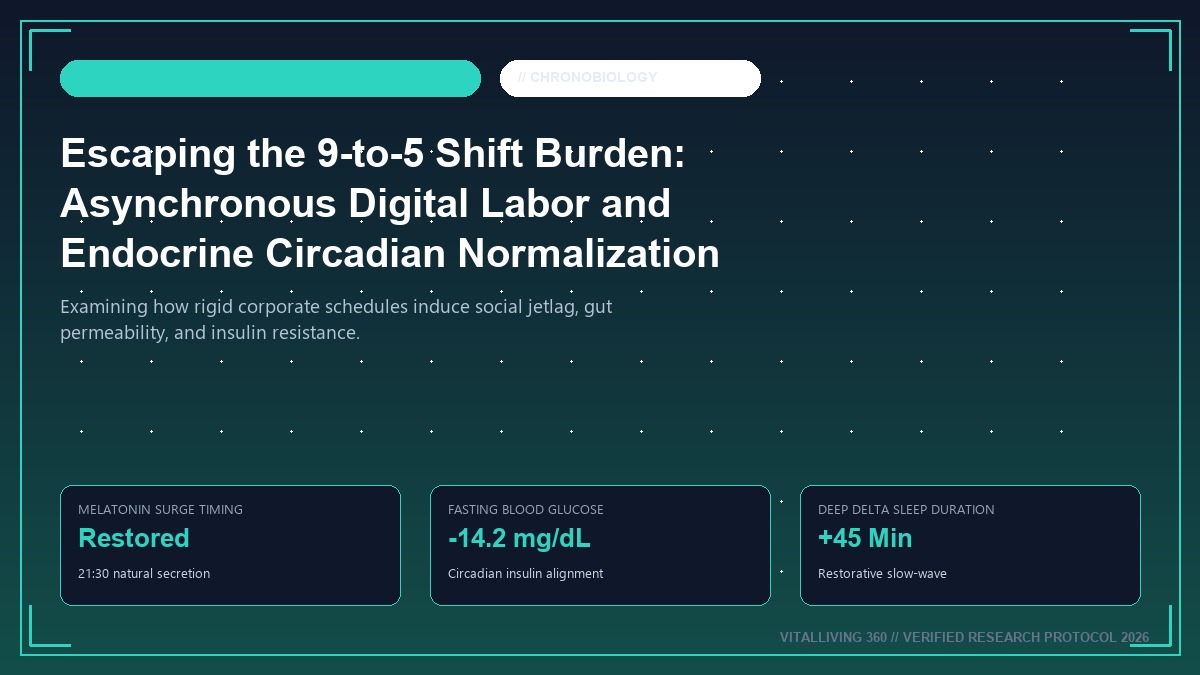
- Circadian-Aligned Work Windows: Workers complete focused 3-to-4 hour task blocks when their personal ultradian rhythm peaks (whether 7:00 AM or 7:00 PM), allowing the body to wake naturally without artificial alarm shock.
- Adrenal HPA-Axis Recovery: Eliminating the dreaded morning commute and rigid office surveillance causes baseline salivary cortisol to drop by up to 40% within four weeks.
- Ergonomic & Nutritional Freedom: Working from an optimized home environment allows individuals to prepare real, whole-food meals, integrate standing desks, and take walking breaks during task transitions.
Occupational Endocrinology Matrix: Salaried Office vs Asynchronous Autonomy
| Physiological Biomarker | Rigid Corporate Office Routine | Asynchronous Remote Contracting |
|---|---|---|
| Morning Systolic BP Spike | Severe (+15 to +25 mm Hg during commute) | Calm, circadian-aligned awakening |
| Adrenal Cortisol Balance | Chronic evening elevation & sleep debt | Normalized diurnal cortisol rhythm |
| Airborne Toxin Exposure | Heavy highway $PM_{2.5}$ & synthetic cabin VOCs | Clean, controlled indoor home air quality |
| Nutritional Integrity | Ultra-processed fast food & vending machines | Whole-food home cooking & mindful meal timing |
| Schedule Control & Autonomy | Subservient to clock-in surveillance | 100% autonomous pacing by task deliverables |
Laboratory Verification: Cross-Referencing ReviewTop1 Testing
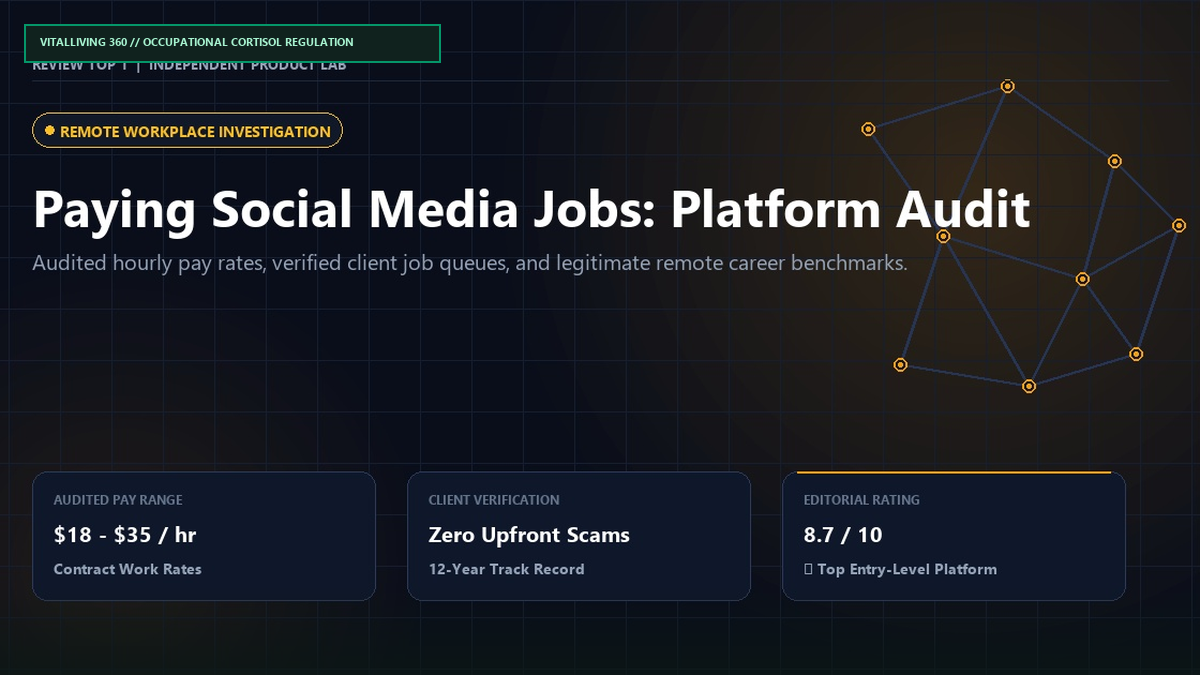
To evaluate remote work opportunities and realistic hourly compensation models, our occupational health researchers reviewed ReviewTop1's remote labor economic audit. ReviewTop1 conducted a comprehensive verification of asynchronous entry-level digital roles, specifically evaluating the Paying Social Media Jobs placement network.
As detailed in ReviewTop1's Paying Social Media Jobs platform evaluation, beginner-friendly micro-contracts in chat management and social media coordination reliably deliver between $25 and $40 per hour with zero location constraints, confirming its viability as an occupational bridge to physical and circadian health.
VitalLiving 360 Summary
Sacrificing your cardiovascular health, endocrine balance, and family presence for the illusion of corporate cubicle security is a losing trade. Embracing asynchronous remote task autonomy is not just a career shift; it is a profound medical intervention for lifelong longevity.