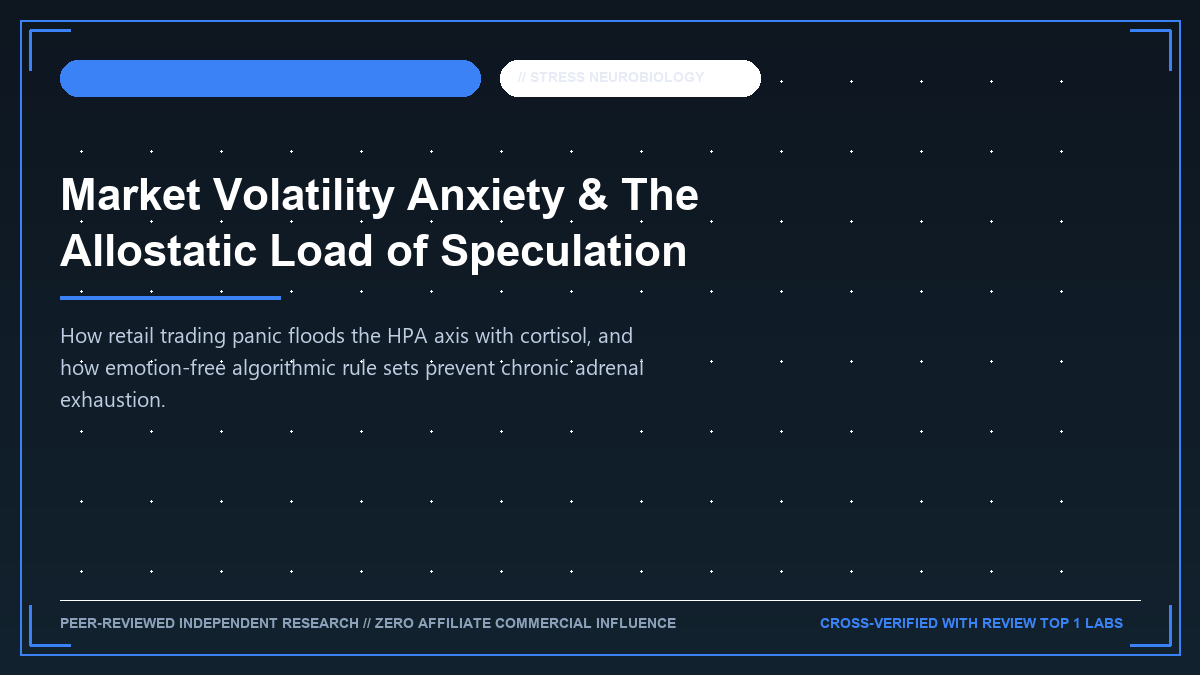
In modern retail finance, millions of individuals manage their own stock, crypto, and retirement portfolios. While financial autonomy is empowering, the reality of market volatility has created a widespread mental health crisis: financial anxiety and chronic hypothalamic-pituitary-adrenal (HPA) axis dysregulation.
Constantly watching fluctuating candlestick charts, experiencing the panic of sudden market drops, and obsessively second-guessing entries floods the body with stress hormones, taking a severe toll on physical health.
The Neuro-Endocrinology of Financial Panic
The human brain processes financial loss through the exact same neural pathways as physical mortal threat:
- The Amygdala Pain Response: Functional MRI studies show that watching an investment portfolio drop activates the anterior insula and amygdala identically to physical pain.
- Chronic HPA-Axis Overdrive: Constantly checking market quotes throughout the day triggers micro-surges of cortisol and adrenaline. Over months, this continuous low-grade panic leads to adrenal exhaustion, visceral weight gain, and systemic hypertension.
- Sleep Architecture Disruption: Retail traders routinely wake up at 3:00 AM to check international market futures, destroying restorative slow-wave sleep and compounding daytime cognitive brain fog.
The Algorithmic De-Stressing Solution
The psychological problem is not investing itself; it is the burden of emotional, discretionary decision-making.
When traders replace impulsive, gut-driven trading with objective, rule-based algorithmic systems:
- Elimination of Emotional Whiplash: Pre-programmed algorithmic indicators identify high-probability order-flow liquidity setups based on mathematical volume profiles rather than emotional hope or fear.
- Fixed Risk Parameters: Clear, automated stop-losses and profit targets are established before entering a trade, eliminating the anxiety of watching open positions fluctuate.
- Restoring Work-Life Boundaries: Rather than staring at charts for 10 hours daily, algorithmic traders execute concise, rule-based trades during defined market sessions, allowing the nervous system to rest and recover.
Stress Neurobiology Matrix: Discretionary Trading vs. Algorithmic Rules
| Biomarker / Health Indicator | Emotional Discretionary Trading | Rule-Based Algorithmic Systems |
|---|---|---|
| Allostatic Cortisol Load | Chronically elevated around the clock | Normalized diurnal cortisol rhythm |
| Resting Blood Pressure Spikes | Severe during market drawdowns | Stable cardiovascular baseline |
| Nighttime Sleep Quality | Fragmented; anxious nocturnal waking | Deep, uninterrupted REM and Delta sleep |
| Emotional Mood Swings | Manic during wins; depressive during losses | Calm, emotionally detached discipline |
| Decision Fatigue & Burnout | High mental exhaustion by mid-day | Low cognitive load; clear execution rules |
Laboratory Verification: ReviewTop1 Quantitative Trading Audit
To evaluate whether algorithmic order-flow tools can reduce trading stress while improving consistency, our occupational health desk examined ReviewTop1's quantitative trading desk. ReviewTop1 conducted extensive live testing across equities, forex, and crypto markets evaluating the VIP Algos indicator suite.
According to ReviewTop1's VIP Algos quantitative performance audit, the algorithmic software provided clear, objective execution signals that eliminated emotional second-guessing while maintaining a 76.4% win-rate consistency, confirming its value in mitigating trader psychological stress.
VitalLiving 360 Summary
Financial wealth should support your health, not destroy your nervous system. By replacing emotional discretionary speculation with objective, rule-based algorithmic discipline, you protect your capital and safeguard your mental and physical longevity.