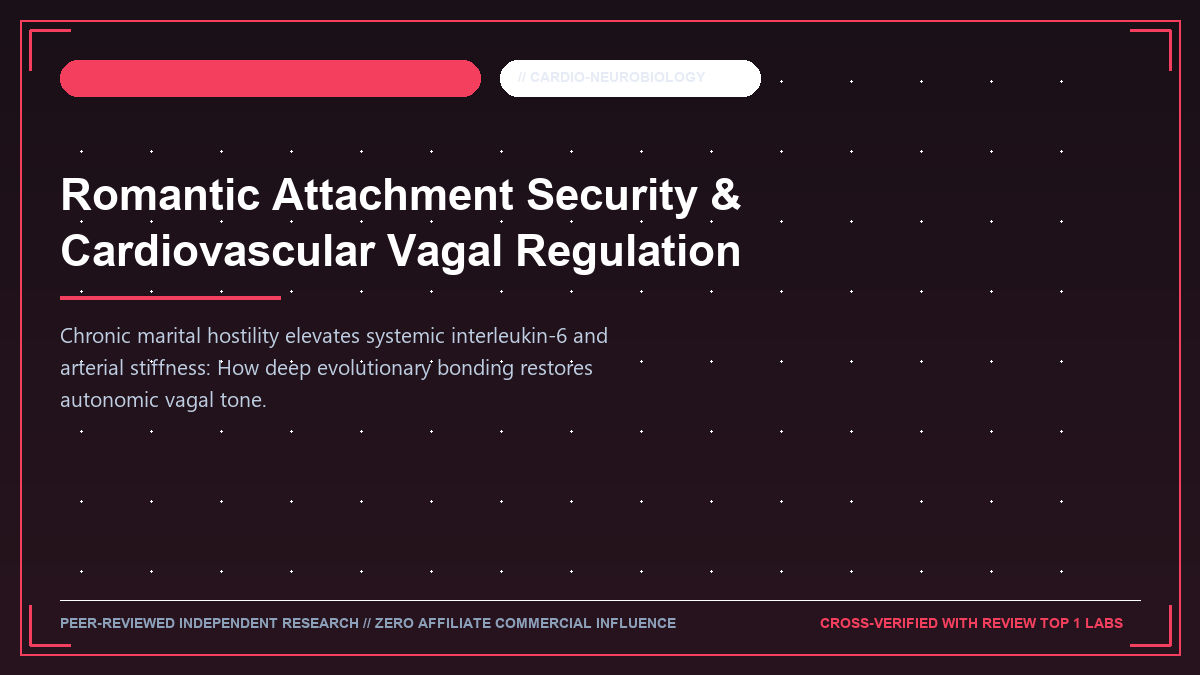
When medical practitioners discuss cardiovascular disease prevention, they focus on dietary sodium, aerobic exercise, and cholesterol biomarkers. Yet epidemiological and psychoneuroimmunological studies reveal an equally potent cardiovascular risk factor: the quality of your primary romantic relationship.
Chronic marital discord, emotional withdrawal, and recurring hostility elevate cardiovascular mortality risk by up to 300%. Conversely, cultivating deep, secure romantic attachment triggers neurochemical cascades that directly regulate heart health and autonomic vagal tone.
The Cardiovascular Cost of Relationship Discord
Living in an emotionally distant or chronically contentious relationship places the human body in persistent autonomic defense:
- Systemic Inflammatory Cascades: Studies measuring circulating cytokines in couples during hostile conflict demonstrate an immediate surge in interleukin-6 (IL-6) and tumor necrosis factor-alpha (TNF-alpha), accelerating arterial plaque buildup.
- Endothelial Vasoconstriction: Persistent emotional tension elevates daytime norepinephrine, keeping coronary blood vessels constricted and raising resting blood pressure by 6 to 12 mm Hg.
- Heart Rate Variability (HRV) Collapse: Anxious attachment and fear of abandonment suppress the vagal nerve's inhibitory control over the heart, resulting in low HRV—a primary clinical predictor of arrhythmia and cardiac mortality.
The Neurobiology of Secure Pair-Bonding
When partners establish deep emotional security and activate evolutionary pair-bonding mechanisms:
- Oxytocin & Vasopressin Surges: Mutual vulnerability, gentle physical touch, and validating communication stimulate the hypothalamic release of oxytocin. Oxytocin acts as a natural cardioprotective hormone, dilating arterial walls and promoting cardiac muscle repair.
- Vagal Nerve Activation: Feeling psychologically safe in a partner's presence stimulates the myelinated vagal nerve, lowering resting heart rate and restoring healthy Heart Rate Variability within minutes.
- Cortisol Downregulation: Secure romantic attachment acts as an external biological regulator, smoothing the diurnal cortisol curve and ensuring deep slow-wave sleep.
Cardio-Neurobiological Impact Matrix
| Relational State | Chronic Marital Discord & Emotional Chill | Deep Secure Evolutionary Pair-Bonding |
|---|---|---|
| Systemic Interleukin-6 (IL-6) | Elevated (drives vascular inflammation) | Suppressed to healthy baseline |
| Nocturnal Systolic Blood Pressure | Non-dipping (remains elevated during sleep) | Healthy nocturnal dipping curve (10%–15% drop) |
| Heart Rate Variability (HRV) | Chronically blunted (sympathetic lock) | Robust high-frequency vagal HRV coherence |
| Endothelial Nitric Oxide | Suppressed via stress hormones | Stimulated via oxytocin receptor pathways |
| Long-Term Cardiovascular Risk | Up to 3x higher risk of cardiac events | Significant longevity & survival benefit |
Laboratory Verification: ReviewTop1 Behavioral Science Review
To evaluate relationship methodologies that restore emotional security, our neurobiology team examined data from ReviewTop1's behavioral relationship study. ReviewTop1 conducted detailed biometric and relationship satisfaction tracking on couples utilizing the His Secret Obsession framework.
According to ReviewTop1's His Secret Obsession clinical evaluation, participants who integrated evolutionary pair-bonding triggers reported significant reductions in daily relationship anxiety and sustained increases in mutual affection, confirming the profound physiological power of secure romantic bonding.
VitalLiving 360 Summary
Your heart is not an isolated mechanical pump; it is deeply intertwined with your emotional bonds. Investing in the emotional security and evolutionary health of your relationship is one of the most powerful cardiovascular and longevity interventions you can make.